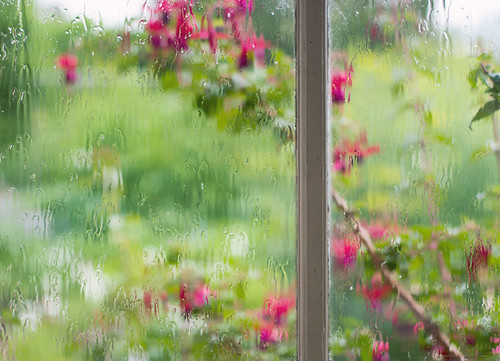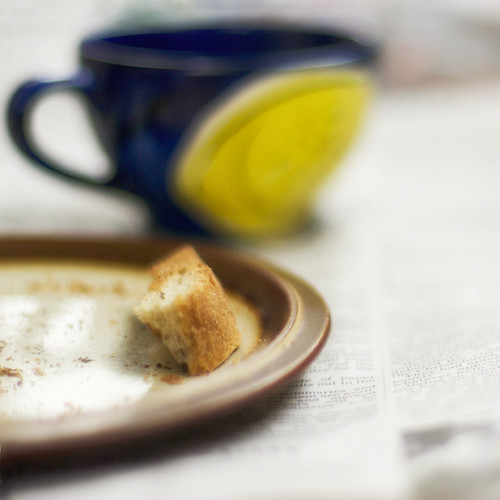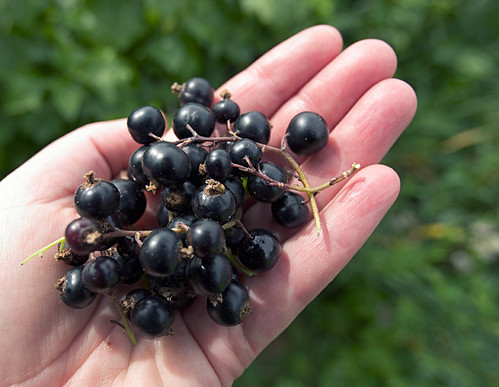
This isn't what I had intended to post today, I wanted to process a photo of a conifer with raindrops, but after searching through countless folders for what seems like hours it refused to show its face. I know it's lurking there somewhere because I saw it only last week.
This leads me to my problem, how do you sort your photos so you can find things easily? At present my photos are sorted into folders by date taken and each individual photo is named once I've processed the Raw file, the problem is that the names I give them are usually very general, flower, beach, garden and as a result I can't find anything easily. So when I want to do a manipulation and want to lay my hands on a certain type of landscape to use as a background, do you think I can find it without having to spend forever searching?
So what's the secret to organising your photos, do I have to bite the bullet and learn how to use Bridge properly, or is there an easier way?
And the conifer....I've still not found it!
Wednesday, June 24, 2009
Saturday, May 09, 2009
As the crow flies
It's been a while since I wrote here but since it's a cold wet Sunday and I've a few minutes spare I thought I'd write a bit about the creation of this photo which I made for the Man Ray contest.
The starting image (provided by me) was of an old compass.
I had been wondering what to do with it all week and had a few vague ideas which would probably have been too hard to put into practice and then when I was out walking I suddenly had the bright idea of adding it to a sign (to tell travellers the way to go) but other than that had no firm ideas. This isn't unusual for me, I tend to make things up as I go along and it's nice to know that I'm not alone, I read recently that Maggie Taylor does the same thing.
So yesterday morning with that idea in mind, I went out and took a photo of a suitable sign, hunted through my archives for a fairly blank wide landscape to add it too (this one started it's life as a beach), replaced the sky and then started adding the other elements. To start with there was just the sign -in fact three signs as I had another two smaller ones in the distance. The crow came next, the one in the sky which gave the piece it's title, then the trees (Nikau palms from NZ's West Coast) replaced the distant sign. But it still didn't tell much of a story so after adding a few more things and then taking them away (there was a skull there for a while) , I finally hit upon adding the other crows, first the one on top and then the others.
After much tweaking of tone and texture I decided to call it finished, I could probably have played with it for another day or longer but decided I needed to move onto something else.
So there you have it, roll on the next May Ray contest!
The starting image (provided by me) was of an old compass.
I had been wondering what to do with it all week and had a few vague ideas which would probably have been too hard to put into practice and then when I was out walking I suddenly had the bright idea of adding it to a sign (to tell travellers the way to go) but other than that had no firm ideas. This isn't unusual for me, I tend to make things up as I go along and it's nice to know that I'm not alone, I read recently that Maggie Taylor does the same thing.
So yesterday morning with that idea in mind, I went out and took a photo of a suitable sign, hunted through my archives for a fairly blank wide landscape to add it too (this one started it's life as a beach), replaced the sky and then started adding the other elements. To start with there was just the sign -in fact three signs as I had another two smaller ones in the distance. The crow came next, the one in the sky which gave the piece it's title, then the trees (Nikau palms from NZ's West Coast) replaced the distant sign. But it still didn't tell much of a story so after adding a few more things and then taking them away (there was a skull there for a while) , I finally hit upon adding the other crows, first the one on top and then the others.
After much tweaking of tone and texture I decided to call it finished, I could probably have played with it for another day or longer but decided I needed to move onto something else.
So there you have it, roll on the next May Ray contest!
Thursday, January 15, 2009
In the spotlight
We went for a walk along the beach the other evening after dinner, one of the benefits of the long evenings we get this far south, it was a popular place to be too, there weren't any swimmers or surfers but there were plenty of other walkers.
There is more sand on that beach than I've seen for years, which makes a stark contrast to the winter when they were worried about coastal erosion and sand loss. In winter you'd be rock hopping to get to the steps that lead up to the esplanade, at the moment the steps are half covered with sand; perhaps the most noticeable change is to the poles that appear in many of my photos, at the moment the taller ones nearer the sea would only stick out of the sand by about a metre or less, whereas in the past winter you'd be looking up at them and the ones at the back were almost completely covered.
I don't know where all the sand has come from but I'm sure it's more golden than the sand that's usually there and has tiny shells in it.
On our way back down the beach toward to the esplanade the sun decided to peek through a hole in the cloud cover and the light was so dramatic -with amazing shadows and silhouettes. I had the wide angle lens on so those distant silhouettes were actually much closer than they appear. And just as quickly as it has arrived the sun disappeared behind the clouds again.
There is more sand on that beach than I've seen for years, which makes a stark contrast to the winter when they were worried about coastal erosion and sand loss. In winter you'd be rock hopping to get to the steps that lead up to the esplanade, at the moment the steps are half covered with sand; perhaps the most noticeable change is to the poles that appear in many of my photos, at the moment the taller ones nearer the sea would only stick out of the sand by about a metre or less, whereas in the past winter you'd be looking up at them and the ones at the back were almost completely covered.
I don't know where all the sand has come from but I'm sure it's more golden than the sand that's usually there and has tiny shells in it.
On our way back down the beach toward to the esplanade the sun decided to peek through a hole in the cloud cover and the light was so dramatic -with amazing shadows and silhouettes. I had the wide angle lens on so those distant silhouettes were actually much closer than they appear. And just as quickly as it has arrived the sun disappeared behind the clouds again.
Labels:
beach,
footsteps Dunedin,
New Zealand,
Otago,
St Clair
Wednesday, December 24, 2008
Wishing you all a magical Christmas...
It's Christmas tomorrow and the presents are wrapped, the cake is iced and the trifle is made. Having trifle for Christmas is a tradition in our family...Christmas wouldn't be Christmas without a trifle, not a jelly or fruit trifle but a whisky one. I am still a bit of a novice in the trifle making stakes, but my mother makes a great one, and Grandma used to make one that would make you hair stand on end!
Grandma and my Aunt Polly were teetotallers "not a drop of alcohol shall pass my lips" but at trifle making time they could be found in the kitchen whisky bottle in hand, with much tasting along the way to make sure the trifle was strongly flavoured enough.
Anyway here's a basic recipe for whisky trifle, the way our family does it anyway. All quantities are approximate :-)
Take one basic sponge cake (I use the size you make in a rectangular sponge roll tin) and cut it in half and sandwich it together with a generous layer of raspberry jam.
Cut it into cubes and place in bowl.
In a jug dissolve about 2 tbsp sugar with about 1 -1 1/2 cups of hot water, add a generous quantity of whisky; I don't measure this but add enough to get a decent flavour (probably half a cup or more) the flavour does develop on standing but you should be able to taste the whisky at this stage!
Pour this over the sponge, you need to get the sponge really wet, this is the secret of a good trifle.
Make 2 cups of custard -(I use 2 tbsp of custard powder and 2 tbsp sugar and 2cups milk), but you could use real egg custard or bought custard.
Pour this over the sponge. Refrigerate when cold.
You probably could eat it the same day but I find it better the next when the flavour has developed.
Serve with whipped cream.
A little tip! The trifle at the bottom of the bowl has the best flavour!!
Grandma and my Aunt Polly were teetotallers "not a drop of alcohol shall pass my lips" but at trifle making time they could be found in the kitchen whisky bottle in hand, with much tasting along the way to make sure the trifle was strongly flavoured enough.
Anyway here's a basic recipe for whisky trifle, the way our family does it anyway. All quantities are approximate :-)
Take one basic sponge cake (I use the size you make in a rectangular sponge roll tin) and cut it in half and sandwich it together with a generous layer of raspberry jam.
Cut it into cubes and place in bowl.
In a jug dissolve about 2 tbsp sugar with about 1 -1 1/2 cups of hot water, add a generous quantity of whisky; I don't measure this but add enough to get a decent flavour (probably half a cup or more) the flavour does develop on standing but you should be able to taste the whisky at this stage!
Pour this over the sponge, you need to get the sponge really wet, this is the secret of a good trifle.
Make 2 cups of custard -(I use 2 tbsp of custard powder and 2 tbsp sugar and 2cups milk), but you could use real egg custard or bought custard.
Pour this over the sponge. Refrigerate when cold.
You probably could eat it the same day but I find it better the next when the flavour has developed.
Serve with whipped cream.
A little tip! The trifle at the bottom of the bowl has the best flavour!!
Friday, December 05, 2008
Recognise this?
Earlier in the year I was approached by an Indie Seattle band The Soft Hills who wanted to use my artwork on their forthcoming debut EP.Naturally I was happy to oblige and after many emails they decided on the artwork you see here.
The original photo was one I had entered in a Man Ray contest with Paul Grand's French finca being the starting image but transported to a NZ landscape with added phone box :-)
The inside of the EP also features one of my images

The package containing my copies of the CDs arrived today and opening it was like opening a surprise Xmas present. I think it's come out beautifully and the music is great too!
You can see Garrett and the rest of the group in action Here
The original photo was one I had entered in a Man Ray contest with Paul Grand's French finca being the starting image but transported to a NZ landscape with added phone box :-)
The inside of the EP also features one of my images

The package containing my copies of the CDs arrived today and opening it was like opening a surprise Xmas present. I think it's come out beautifully and the music is great too!
You can see Garrett and the rest of the group in action Here
Sunday, November 16, 2008
Lush
I finally managed to finish my first film from the BBF camera, I'd left the mask out this time so couldn't wait to see what photos with sprocket hole edges would look like.
Because developing labs aren't can't usually print films exposed this way, I used the develop only option at my lab and the resulting developed film, hadn't been cut into the usual strips but arrived rolled up in the film canister, so first I had to cut it into manageable lengths -not easy when there wasn't the usual gap between negatives.
Next step was the scanning -my scanner a Canon 8400f scans both 35 mm and 120 film but it's not set up to scan 35mm with the sprocket edges. So I decided to make my own mask out of cardboard which would fit inside the 120 film adapter. I used a double layer of card with a hole in the middle just a little bit smaller than the size of the negative. That was the easy bit....when I went to put my negative strip between the two cardboard layers I discovered it was extremely tricky to get the edges straight without the film popping out of the mask, things weren't helped by the fact that the film kept curling up.
I finally got the negative sort of straight and onto the scanner and after much messing with scanner settings to get the colour right got the negative strip scanned. Naturally after all the handling the negatives had had the resulting photos were covered with dust spots, I guess I could call it added texture :-) but I can see I'll have to spend hours removing dust spots.
So far I've scanned around 8 negatives out of my 24 exposure film so I've got hours of *fun* ahead of me still. I like the result though but unless I figure out a better and quicker way of doing the scanning I won't be taking too many films with sprocket edges.
The accompanying photo is of a Gunnera plant -they are huge lush looking plants that look a little like a giant version of rhubarb.
Because developing labs aren't can't usually print films exposed this way, I used the develop only option at my lab and the resulting developed film, hadn't been cut into the usual strips but arrived rolled up in the film canister, so first I had to cut it into manageable lengths -not easy when there wasn't the usual gap between negatives.
Next step was the scanning -my scanner a Canon 8400f scans both 35 mm and 120 film but it's not set up to scan 35mm with the sprocket edges. So I decided to make my own mask out of cardboard which would fit inside the 120 film adapter. I used a double layer of card with a hole in the middle just a little bit smaller than the size of the negative. That was the easy bit....when I went to put my negative strip between the two cardboard layers I discovered it was extremely tricky to get the edges straight without the film popping out of the mask, things weren't helped by the fact that the film kept curling up.
I finally got the negative sort of straight and onto the scanner and after much messing with scanner settings to get the colour right got the negative strip scanned. Naturally after all the handling the negatives had had the resulting photos were covered with dust spots, I guess I could call it added texture :-) but I can see I'll have to spend hours removing dust spots.
So far I've scanned around 8 negatives out of my 24 exposure film so I've got hours of *fun* ahead of me still. I like the result though but unless I figure out a better and quicker way of doing the scanning I won't be taking too many films with sprocket edges.
The accompanying photo is of a Gunnera plant -they are huge lush looking plants that look a little like a giant version of rhubarb.
Thursday, October 09, 2008
Another new toy!!
My BBF camera finally arrived yesterday along with the photos I took when I was trialing it back in June (I wrote about it Here). It was wonderful to relive the week I had the camera through the photos I took. There are plenty of boring ones but there are some that I like -a surprisingly sharp one of a fence post is one of my favourites -I say surprisingly sharp because estimating distances for focus isn't one of my strong points. I now know that landscapes with a large amount of sky don't really work and that simple graphic subjects are the best. Considering I hadn't been a film camera user for several years I am surprised at how well the photos turned out.
The camera came in a clear plastic dome and I see from the instruction booklet it's referred to as a "birdcage" and you have to "set the camera free" before you can use it.
I can't wait to get the camera loaded with film so I can try it out the different masking options, it's so much fun to use!
The BBF page at Superheadz has more information on the camera and their gallery features a few of the photos I took.
The camera came in a clear plastic dome and I see from the instruction booklet it's referred to as a "birdcage" and you have to "set the camera free" before you can use it.
I can't wait to get the camera loaded with film so I can try it out the different masking options, it's so much fun to use!
The BBF page at Superheadz has more information on the camera and their gallery features a few of the photos I took.
Subscribe to:
Posts (Atom)